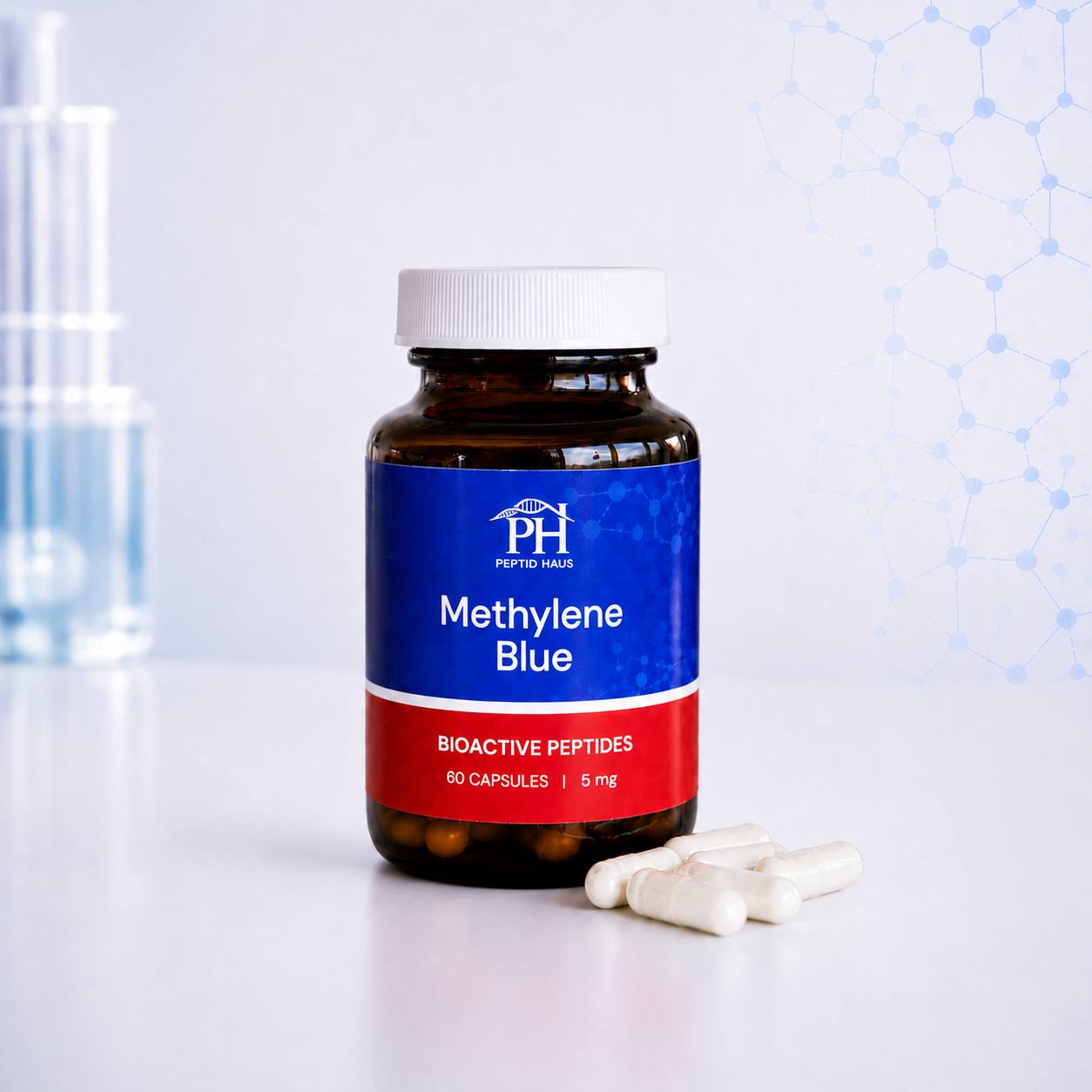
Methylene Blue 5mg (60 capsules)
Methylene Blue 5mg — 60 pharmaceutical-grade research capsules. Methylene blue was the first synthetic drug used in humans and remains the gold-standard antidote for methemoglobinemia. Over the past two decades, it has become one of the most extensively studied low-dose mitochondrial enhancers, with human studies demonstrating measurable effects on brain glucose metabolism, BOLD response, and memory.
Research Overview
Methylene blue (methylthioninium chloride) is a phenothiazine dye with an extraordinary range of well-characterized pharmacology, dose-dependent and frequently U-shaped. At low concentrations (≤ 1 mg/kg), it acts as an alternative electron carrier in the mitochondrial electron transport chain — accepting electrons from NADH and donating them directly to cytochrome c — bypassing complex I/III blockades and increasing cellular ATP production and oxygen consumption rate. At slightly higher concentrations it inhibits monoamine oxidase and tau aggregation, and at clinical-antidote concentrations it reduces methemoglobin to hemoglobin via the NADPH-dependent diaphorase pathway. Functional human imaging at 0.5–4 mg/kg shows increased cerebral glucose metabolism, BOLD response in memory-related circuits, and improved performance on declarative-memory tasks. The molecule has a > 130-year clinical safety history, with the principal contraindications well-mapped (G6PD deficiency; concurrent serotonergic agents).
Primary Research Areas
- Mitochondrial bioenergetics and electron-transport bypass — the canonical small molecule for studying alternative-electron-carrier pharmacology and rescue of complex-I-deficient phenotypes.
- Cognitive and memory research — controlled human fMRI/PET studies show enhanced memory-task performance and increased brain glucose metabolism at low-dose ranges.
- Tauopathy and neurodegeneration — the parent scaffold for hydromethylthionine and a workhorse tool in tau-aggregation assays; investigated in AD, FTD and PSP models.
- Mood and psychiatric research — studied in bipolar depression and major depressive disorder, leveraging dose-dependent MAO-A inhibition and mitochondrial enhancement.
- Methemoglobinemia and oxidative-redox research — the gold-standard antidote and a robust probe of NADPH-diaphorase activity, G6PD-deficiency phenotypes and free-radical biology.